

Asif Ali Zardari
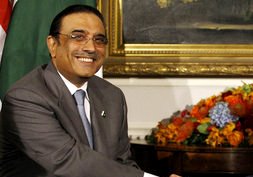
Asif Ali Zardari, (imagined July 26, 1955, Karachi, Pakistan), legislator who filled in as pioneer of Pakistan (2008– 13) and genuine pioneer of the Pakistan People's Party (PPP) following the demise of his significant other, past head manager Benazir Bhutto, on December 27, 2007.
Zardari—the offspring of Hakim Ali Zardari, a Sindhi proprietor, specialist, and lawmaker—was told at Saint Patrick's School in Karachi and later inspected business in London. He grabbed a reputation for being a playboy and gadfly for his decent lifestyle; an enthusiastic polo player and an outrageous contender, Zardari displayed little eagerness for the political scene. His prearranged commitment to Bhutto, who was the young lady of past president (1971– 73) and PM (1973– 77) Zulfikar Ali Bhutto and whom he had at first met five days going before the overall public revelation of their responsibility, astounded various onlookers. On December 18, 1987, the two were hitched in an organized and for the most part essential administration, and they proceeded to have three children: a tyke, Bilawal, and two young ladies, Bakhtwar and Asifa.
The couple had been hitched not as much as multi year when Pres. Mohammad Zia-ul-Haq was executed, completing over a period of military run the show. Bhutto's subsequent achievement at the reviews brought into office as official. In 1990 her residency was halted by contamination related shock, regardless, and both Zardari and his significant other were the point of convergence of strikes from opposition administrators and what's more frustrated people from the PPP, Bhutto's own specific social event. Caught on stealing and coercion charges, Zardari was confined in 1990, and, following his release in 1993, corruption attestations against him expanded (some stamped him "Mr. Ten Percent," asserting he took kickbacks on enormous government contracts in the midst of Bhutto's residency in office).
Zardari filled in as a person from the National Assembly from 1990 to 1993—in the midst of which time he was once in a while released from prison to go to sessions—and from 1993 to 1996. After Bhutto's entry to control in 1993, he filled in as minister of the earth (1993– 96) and chose pastor for wander (1995– 96) in her governing body. Zardari commandingly searched for control of the PPP, anyway he was the subject of reliably extending criticism from rivals inside and outside the social occasion. Additionally, Zardari was significantly drawn in with a Bhutto family squabble drove by Bhutto's kin, Murtaza, and mother, Nusrat; the dispute among Zardari and Murtaza over specialist of the Bhutto clan split the PPP and destabilized Bhutto's lawmaking body. The Murtaza-Zardari dispute completed abruptly on September 20, 1996, when Murtaza was shot and killed by police.
Zardari was involved in Murtaza's passing, and, following the second breaking down of Bhutto's lawmaking body in November 1996, he was caught on charges that included degradation, unlawful duty evasion, and murder. But never prosecuted, Zardari was confined from 1997 to 2004; he was decided to the Senate from his remedial office cell in the midst of this time. The toll guaranteed on Zardari's prosperity by his confinement was critical. Following his release, Zardari searched for therapeutic treatment in the United States for mental torment. He returned to Pakistan with Bhutto's resumption of political development in 2007 and was given relief for his charged offenses. Following Bhutto's going in December 2007, Zardari named his kid, Bilawal, official of the PPP and made himself the get-together's cochairman.
In the parliamentary choices of February 2008, the PPP got 33% of the open seats, while the get-together of past pioneer Nawaz Sharif won one-fourth of the seats. In March the two get-togethers formed a coalition government. In spite of the way that distinctions destabilized the association in the months following its game plan, in August 2008 Zardari and Sharif drove the advancement to summon Pres. Pervez Musharraf. To keep up a key separation from advance open mortification, Musharraf surrendered his office. Sharif and Zardari were not obliged, in any case, and their kept up quarreling finally influenced Sharif to pull back his social affair from the coalition. Zardari easily won the September 2008 presidential races.
Disintegration between the two rivals expanded further in mid 2009, when the Supreme Court voted to bar Sharif's kin from his circumstance as supervisor minister of the Punjab and to keep up a limitation precluding Sharif himself from holding political office (the confinement began from his 2000 catching conviction). Sharif asserted that the court's choices were politically prodded and maintained by Zardari. At that point, the status of the Supreme Court judges dismissed under Musharraf who by and by couldn't appear to be restored—one of the issues that had undermined the Sharif-Zardari coalition—remained another critical wellspring of contention. Looked with the likelihood of a Sharif-drove challenge in the capital, in March 2009 the organization assented to restore Chief Justice Iftikhar Mohammad Chaudhry and different other Supreme Court judges who had not yet been returned to their posts (Sharif's kin was also returned to his position by and by). The move was seen as a political triumph for Sharif and a gigantic concession as for Zardari, who is thought to have negated Chaudhry's entry because of the probability that the pardon Zardari had acknowledged under Musharraf might be toppled. In all actuality, in December 2009 the Pakistani Supreme Court oversaw as unlawful the 2007 absolve guaranteeing administrators reprimanded for pollution. Zardari was among the an extensive number of people impacted by the choice, which essentially reactivated collections of proof against them.
Asif Ali Zardari, (imagined July 26, 1955, Karachi, Pakistan), legislator who filled in as pioneer of Pakistan (2008– 13) and genuine pioneer of the Pakistan People's Party (PPP) following the demise of his significant other, past head manager Benazir Bhutto, on December 27, 2007.
Zardari—the offspring of Hakim Ali Zardari, a Sindhi proprietor, specialist, and lawmaker—was told at Saint Patrick's School in Karachi and later inspected business in London. He grabbed a reputation for being a playboy and gadfly for his decent lifestyle; an enthusiastic polo player and an outrageous contender, Zardari displayed little eagerness for the political scene. His prearranged commitment to Bhutto, who was the young lady of past president (1971– 73) and PM (1973– 77) Zulfikar Ali Bhutto and whom he had at first met five days going before the overall public revelation of their responsibility, astounded various onlookers. On December 18, 1987, the two were hitched in an organized and for the most part essential administration, and they proceeded to have three children: a tyke, Bilawal, and two young ladies, Bakhtwar and Asifa.
The couple had been hitched not as much as multi year when Pres. Mohammad Zia-ul-Haq was executed, completing over a period of military run the show. Bhutto's subsequent achievement at the reviews brought into office as official. In 1990 her residency was halted by contamination related shock, regardless, and both Zardari and his significant other were the point of convergence of strikes from opposition administrators and what's more frustrated people from the PPP, Bhutto's own specific social event. Caught on stealing and coercion charges, Zardari was confined in 1990, and, following his release in 1993, corruption attestations against him expanded (some stamped him "Mr. Ten Percent," asserting he took kickbacks on enormous government contracts in the midst of Bhutto's residency in office).
Zardari filled in as a person from the National Assembly from 1990 to 1993—in the midst of which time he was once in a while released from prison to go to sessions—and from 1993 to 1996. After Bhutto's entry to control in 1993, he filled in as minister of the earth (1993– 96) and chose pastor for wander (1995– 96) in her governing body. Zardari commandingly searched for control of the PPP, anyway he was the subject of reliably extending criticism from rivals inside and outside the social occasion. Additionally, Zardari was significantly drawn in with a Bhutto family squabble drove by Bhutto's kin, Murtaza, and mother, Nusrat; the dispute among Zardari and Murtaza over specialist of the Bhutto clan split the PPP and destabilized Bhutto's lawmaking body. The Murtaza-Zardari dispute completed abruptly on September 20, 1996, when Murtaza was shot and killed by police.
Zardari was involved in Murtaza's passing, and, following the second breaking down of Bhutto's lawmaking body in November 1996, he was caught on charges that included degradation, unlawful duty evasion, and murder. But never prosecuted, Zardari was confined from 1997 to 2004; he was decided to the Senate from his remedial office cell in the midst of this time. The toll guaranteed on Zardari's prosperity by his confinement was critical. Following his release, Zardari searched for therapeutic treatment in the United States for mental torment. He returned to Pakistan with Bhutto's resumption of political development in 2007 and was given relief for his charged offenses. Following Bhutto's going in December 2007, Zardari named his kid, Bilawal, official of the PPP and made himself the get-together's cochairman.
In the parliamentary choices of February 2008, the PPP got 33% of the open seats, while the get-together of past pioneer Nawaz Sharif won one-fourth of the seats. In March the two get-togethers formed a coalition government. In spite of the way that distinctions destabilized the association in the months following its game plan, in August 2008 Zardari and Sharif drove the advancement to summon Pres. Pervez Musharraf. To keep up a key separation from advance open mortification, Musharraf surrendered his office. Sharif and Zardari were not obliged, in any case, and their kept up quarreling finally influenced Sharif to pull back his social affair from the coalition. Zardari easily won the September 2008 presidential races.
Disintegration between the two rivals expanded further in mid 2009, when the Supreme Court voted to bar Sharif's kin from his circumstance as supervisor minister of the Punjab and to keep up a limitation precluding Sharif himself from holding political office (the confinement began from his 2000 catching conviction). Sharif asserted that the court's choices were politically prodded and maintained by Zardari. At that point, the status of the Supreme Court judges dismissed under Musharraf who by and by couldn't appear to be restored—one of the issues that had undermined the Sharif-Zardari coalition—remained another critical wellspring of contention. Looked with the likelihood of a Sharif-drove challenge in the capital, in March 2009 the organization assented to restore Chief Justice Iftikhar Mohammad Chaudhry and different other Supreme Court judges who had not yet been returned to their posts (Sharif's kin was also returned to his position by and by). The move was seen as a political triumph for Sharif and a gigantic concession as for Zardari, who is thought to have negated Chaudhry's entry because of the probability that the pardon Zardari had acknowledged under Musharraf might be toppled. In all actuality, in December 2009 the Pakistani Supreme Court oversaw as unlawful the 2007 absolve guaranteeing administrators reprimanded for pollution. Zardari was among the an extensive number of people impacted by the choice, which essentially reactivated collections of proof against them.
Asif Ali Zardari
![Asif Ali Zardari]() Reviewed by Home Made niche
on
July 29, 2018
Rating:
Reviewed by Home Made niche
on
July 29, 2018
Rating:


No comments: